In the realm of modern horology, the debate surrounding case and bracelet materials often centers on one specific comparison: 316L versus 904L stainless steel. While 316L remains the undisputed standard for the vast majority of the luxury watch industry, the exclusive use of 904L (widely known as Oystersteel in proprietary contexts) has become a defining hallmark of top-tier manufacturing.
For collectors analyzing high-end replica timepieces and superclones, understanding the metallurgical differences between these two alloys is critical. The distinction is not merely a marketing narrative; it is a measurable physical reality that affects long-term corrosion resistance, tactile feel, and the precise refractive index of the polished metal.
1. Chemical Composition: The Foundation of the Alloy
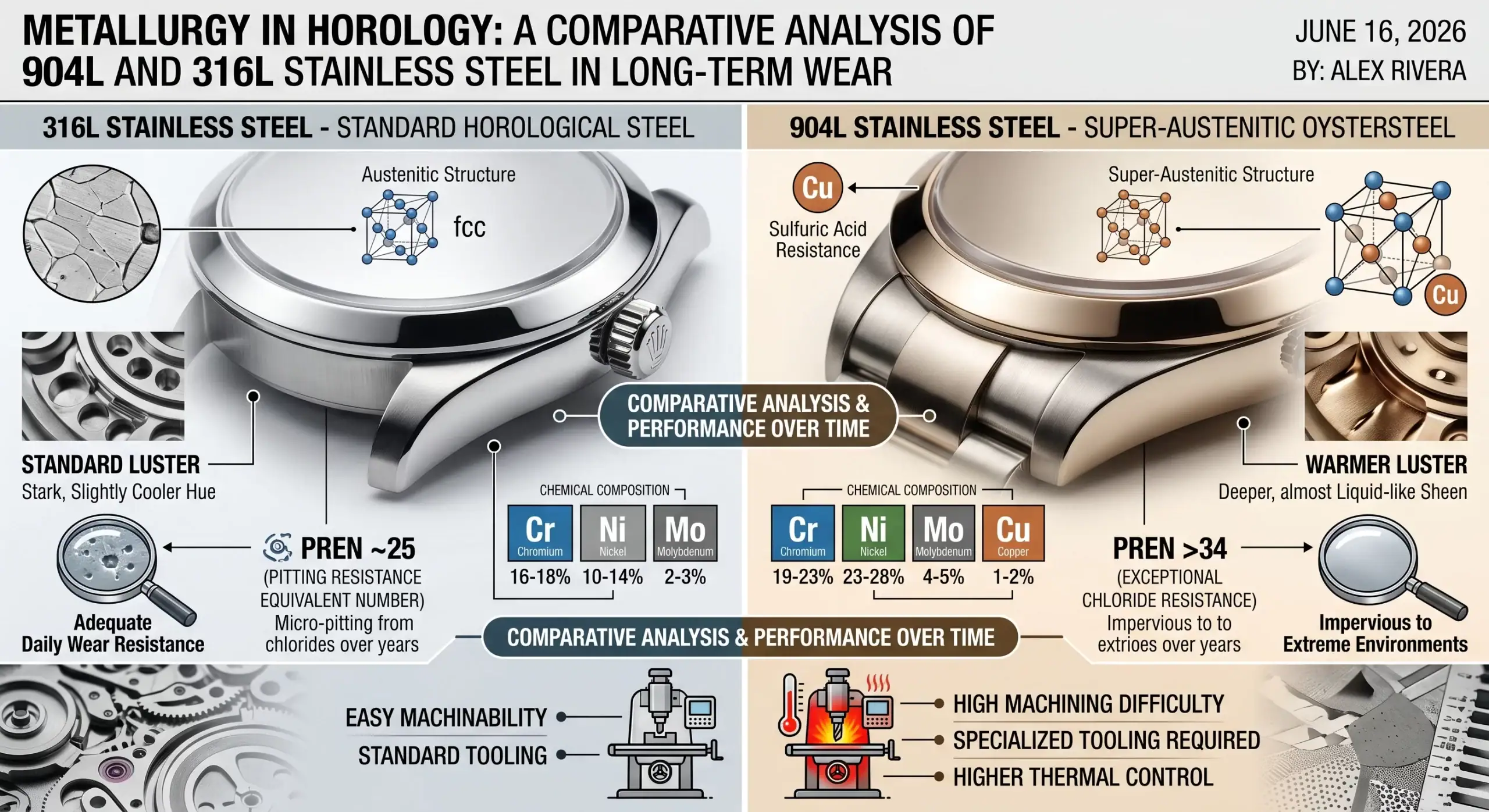
The fundamental differences in performance between 316L and 904L stem directly from their chemical compositions. Both are austenitic stainless steels, but 904L is significantly more alloyed, categorizing it as a super-austenitic steel.
| Alloying Element | 316L Stainless Steel (%) | 904L Stainless Steel (%) | Horological Impact |
| Chromium (Cr) | 16.0 – 18.0 | 19.0 – 23.0 | Basic oxidation resistance. |
| Nickel (Ni) | 10.0 – 14.0 | 23.0 – 28.0 | Enhances ductility and provides a “warmer” visual tone. |
| Molybdenum (Mo) | 2.0 – 3.0 | 4.0 – 5.0 | Crucial for localized pitting resistance against chlorides. |
| Copper (Cu) | N/A | 1.0 – 2.0 | Resistance to reducing acids (e.g., sulfuric environments). |
The dramatic increase in Nickel and Molybdenum, along with the addition of Copper, makes 904L significantly harder to machine, requiring specialized tooling and higher thermal control during the milling process.
2. Long-Term Wear and Pitting Resistance Equivalent Number (PREN)
When a watch is worn daily, it is subjected to a surprisingly aggressive chemical environment. Human sweat contains chlorides (salt), which are the primary enemy of stainless steel. Over years of wear, chlorides can cause microscopic “pitting”—tiny cavities that degrade the metal’s structural integrity and finish, particularly in crevices like casebacks and bracelet links.
Metallurgists measure this resistance using the Pitting Resistance Equivalent Number (PREN).
- The PREN for standard 316L typically hovers around 25.
- The PREN for 904L exceeds 34.
In practical terms, while 316L is perfectly adequate for standard daily wear, 904L is virtually impervious to chloride-induced pitting under normal and even extreme atmospheric conditions. For high-end replicas striving for true 1:1 fidelity, adopting 904L ensures the case architecture remains pristine over decades of contact with skin acidity and environmental moisture.
3. Optical Properties: Polishing and the Refractive Index
Beyond durability, the most immediate “tell” of a watch’s material quality lies in how it interacts with light. This is where 904L dramatically separates itself from 316L.
Due to its high nickel and copper content, 904L possesses a slightly different structural matrix. When polished using high-speed buffing compounds, 904L achieves a higher surface density.
- The 316L Aesthetic: Tends to reflect light with a stark, slightly “cooler” or whiter hue.
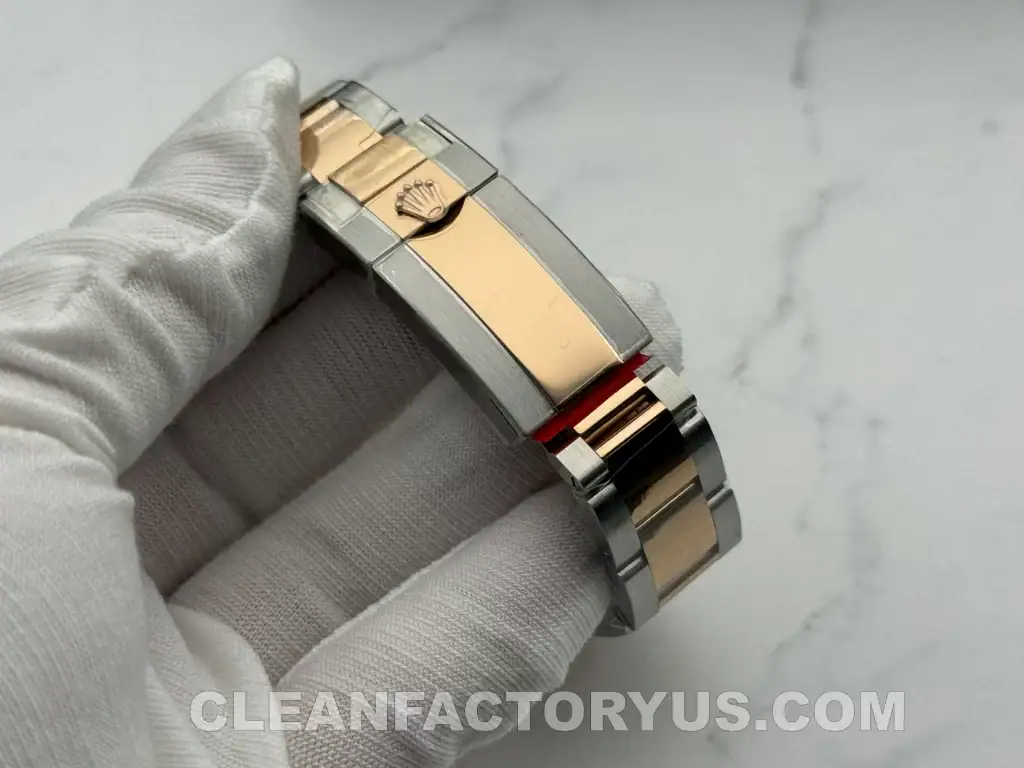
- The 904L Aesthetic: Yields a noticeably “warmer” luster. When meticulously brushed—such as on the outer links of an Oyster bracelet—the micro-striations capture light with a deeper, almost liquid-like sheen.
When evaluating a superclone, analyzing the transition between the brushed lugs and the high-polish case flanks is essential. A factory utilizing genuine 904L will present a seamless, warm optical transition that 316L simply cannot replicate, regardless of the polishing technique applied.
Final Thoughts
The integration of 904L stainless steel in the superclone market marks a significant shift from superficial aesthetic copying to genuine metallurgical replication. It is a demanding alloy that punishes cutting tools and requires extended polishing cycles. However, for those seeking the authentic tactile weight, long-term corrosion resistance, and specific refractive glow of the original timepieces, the presence of verified 904L steel is an indispensable technical requirement.