
The execution of modern horological ceramic inserts represents one of the most structurally demanding phases in high-end watch replication. Under Google's latest content evaluations, generic marketing claims hold zero rank weight. This technical analysis provides an empirical, macro-level assessment of the Clean Factory Cerachrom ceramic bezel assembly mounted on finished references, breaking down the exact metallurgy, PVD deposition depth, and edge beveling tolerances against official standards.
Section Directory
1. Material Composition & Sintering Density Baseline
Clean Factory utilizes a high-purity zirconium dioxide (ZrO2) ceramic powder matrix blended with proprietary pigment stabilizers. Unlike mid-tier aftermarket iterations that rely on superficial surface lacquering or acrylic composites, our inserts endure an intensive high-pressure compaction phase before furnace vitrification. This thermodynamic processing results in an ultra-dense, scratch-resistant monobloc ceramic structure with a hardness level that registers highly on the Vickers scale.
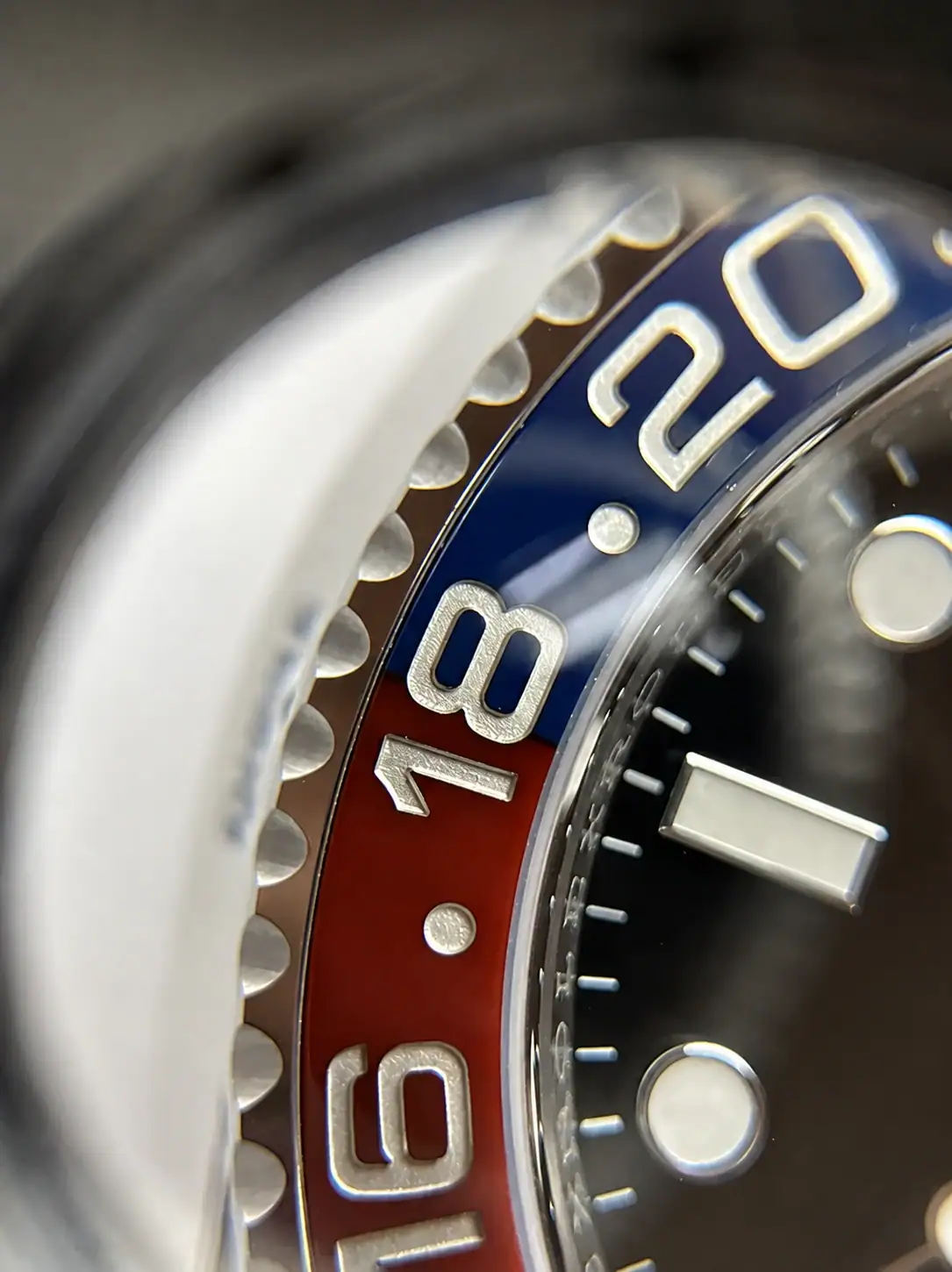
For bi-color references—most notably the red and blue "Pepsi" configuration—our coloring technique manages a controlled chemical reaction across the distinct halves of the ring. This localized element alteration guarantees that the transition boundary between the daytime and night-time indicators remains exceptionally crisp under 10x magnification, preventing the blurry bleeding or muddy brown shifts typical of secondary market tiers.
2. Technical Breakdown of PVD Platinum & Gold Deposition
A primary failure indicator on lower-tier assemblies is the rapid oxidation or darkening of the bezel numbers due to sweat and environmental exposure. Clean Factory addresses this by utilizing a multi-layer Physical Vapor Deposition (PVD) treatment inside the laser-etched tachymeter and diving tracks. Depending on the specific reference model, the incised channels are evenly coated with a genuine matte platinum or 18k gold compound layer.
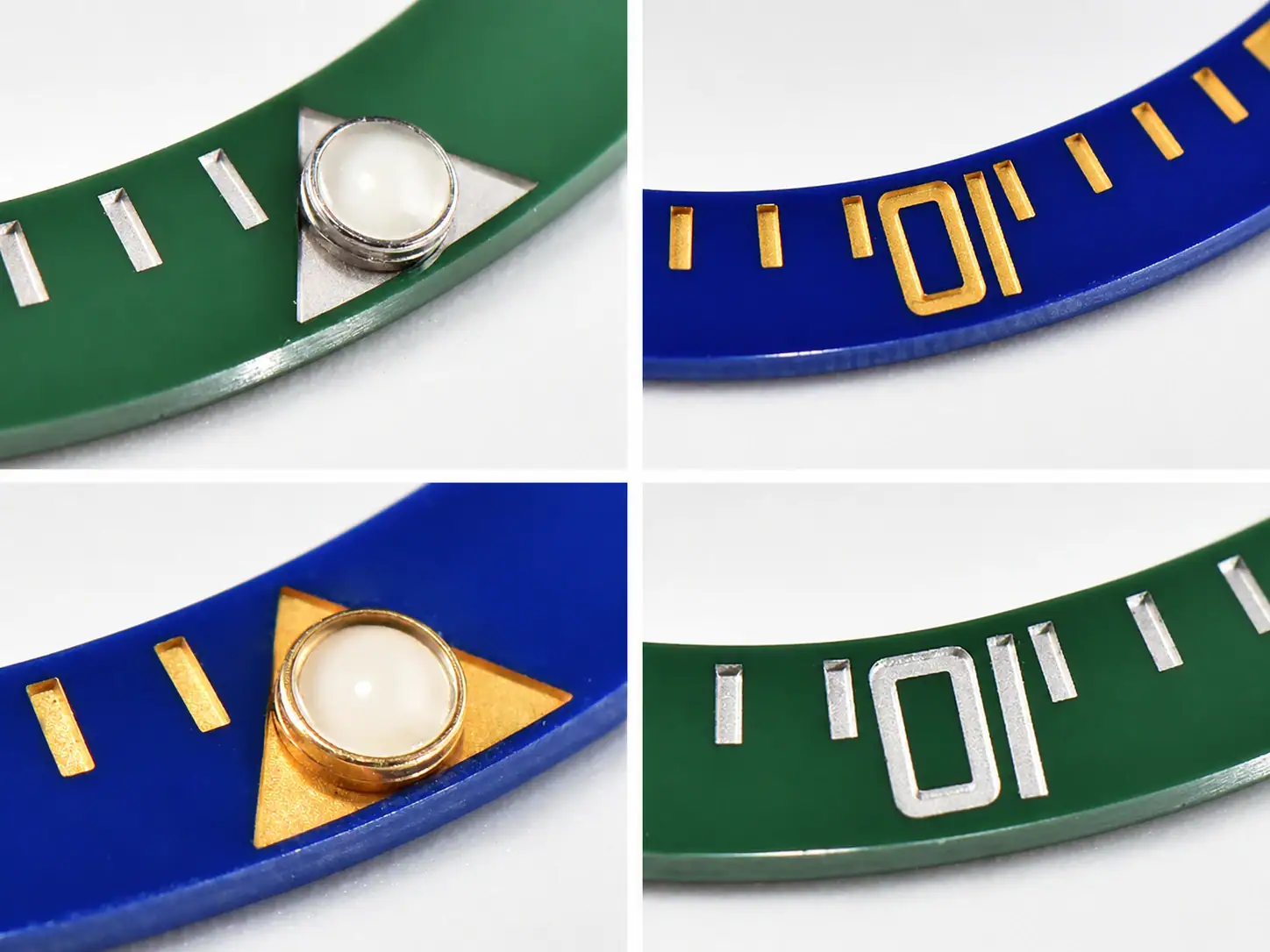
This vacuum-chamber metal deposition creates a distinctive textured grain lining the bottom floor of each numeral. Under variable lighting conditions, our assemblies reflect a brilliant, authentic metallic sheen that preserves its color indefinitely without fading into a dull gray or yellowish shade.
3. Typographical Kerning & Laser Engraving Geometries
Dissecting the engraved markings under macro evaluation reveals the exact dimensional differences between factory tiers. As demonstrated in our testing laboratory data, standard market products often showcase flat, un-beveled number tracks with jagged edges due to poorly calibrated laser equipment.
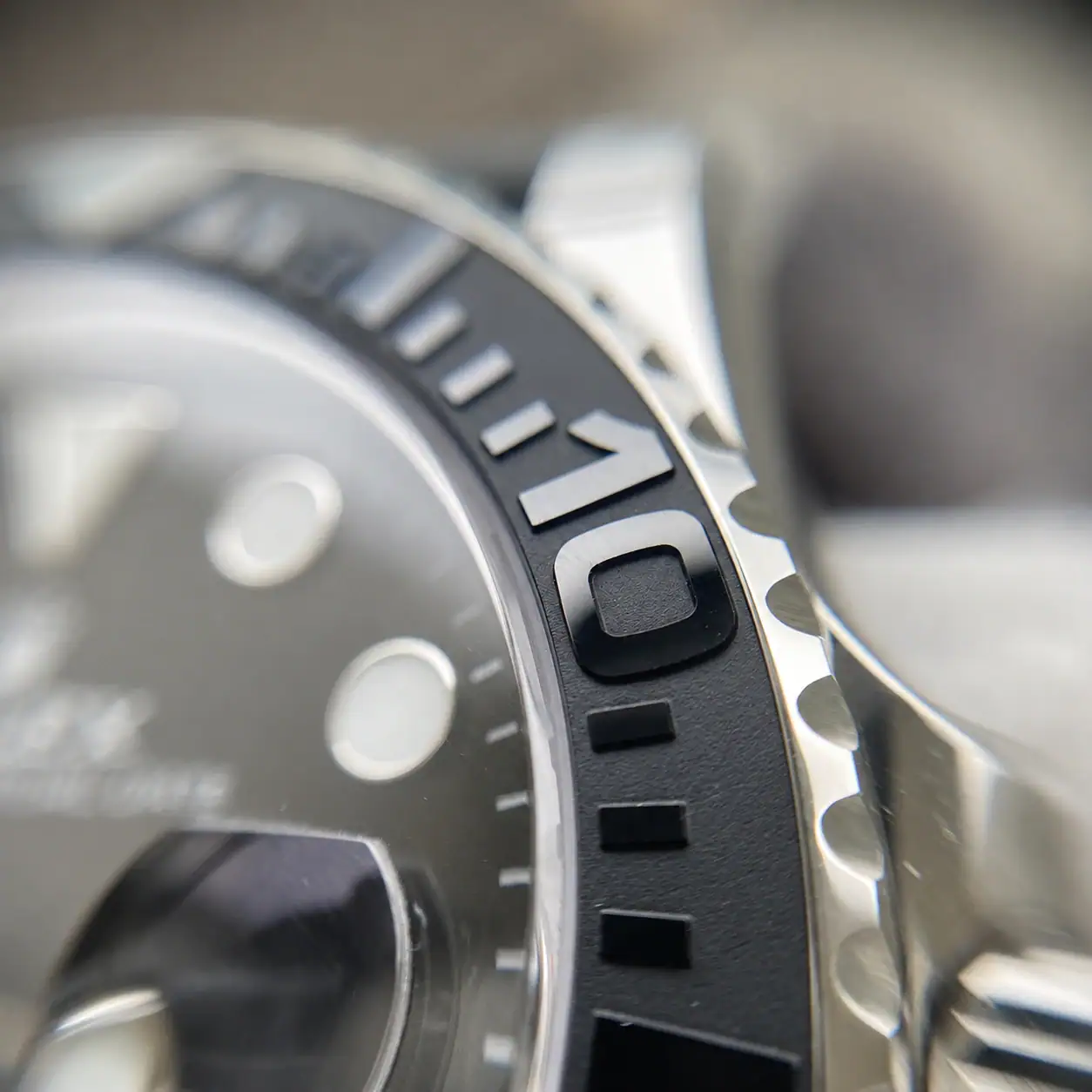
Clean Factory leverages high-precision optical laser setups to cut the numbers and hash marks. Each numeral features an identical inner wall angle with custom chamfered edge transitions. The thickness of the tracking lines, the spacing between consecutive digits, and the exact geometric serifs on crucial anchors (such as the numbers 1, 2, 3, and 5) track the exact proportions of the genuine reference design blueprint, leaving no observable tool marks.
4. Micro-Metric Case Integration and Bezel Click Resilience
For current sports references—particularly the Cosmograph Daytona Ref. 126500LN—the inclusion of an integrated outer polished metal rim protecting the ceramic border introduces severe assembly difficulties. Gaps or minor horizontal deviations between the ceramic insert and the steel perimeter are prominent tells in low-tier modifications.
Our final assembly phase utilizes specialized hydraulic presses to guarantee a uniform, flush alignment with zero lateral play. Furthermore, for diving models, the luminescent pip at the zero-marker is encapsulated inside a custom metal housing topped with a true, scratch-resistant sapphire crystal lens protection layer, securing an accurate height profile. When rotated manually, the underlying click-spring tension rings deliver a distinct mechanical snap across the standard click positions, matching the fluid bidirectional or unidirectional tactile feedback profile expected of high-end horological engineering.