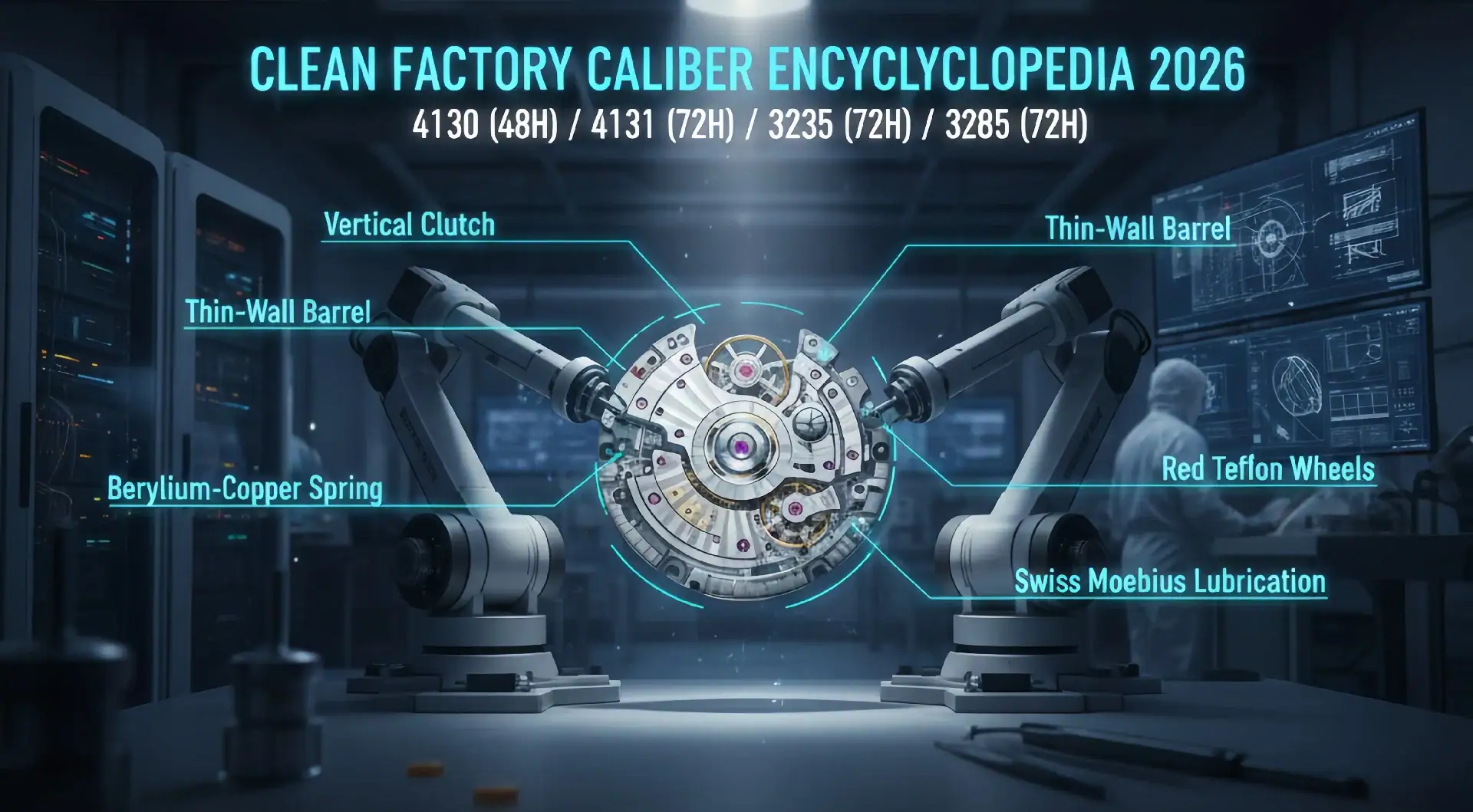
Chapter 1: Metallurgy, CNC Machining, and the Cerachrom Anomaly
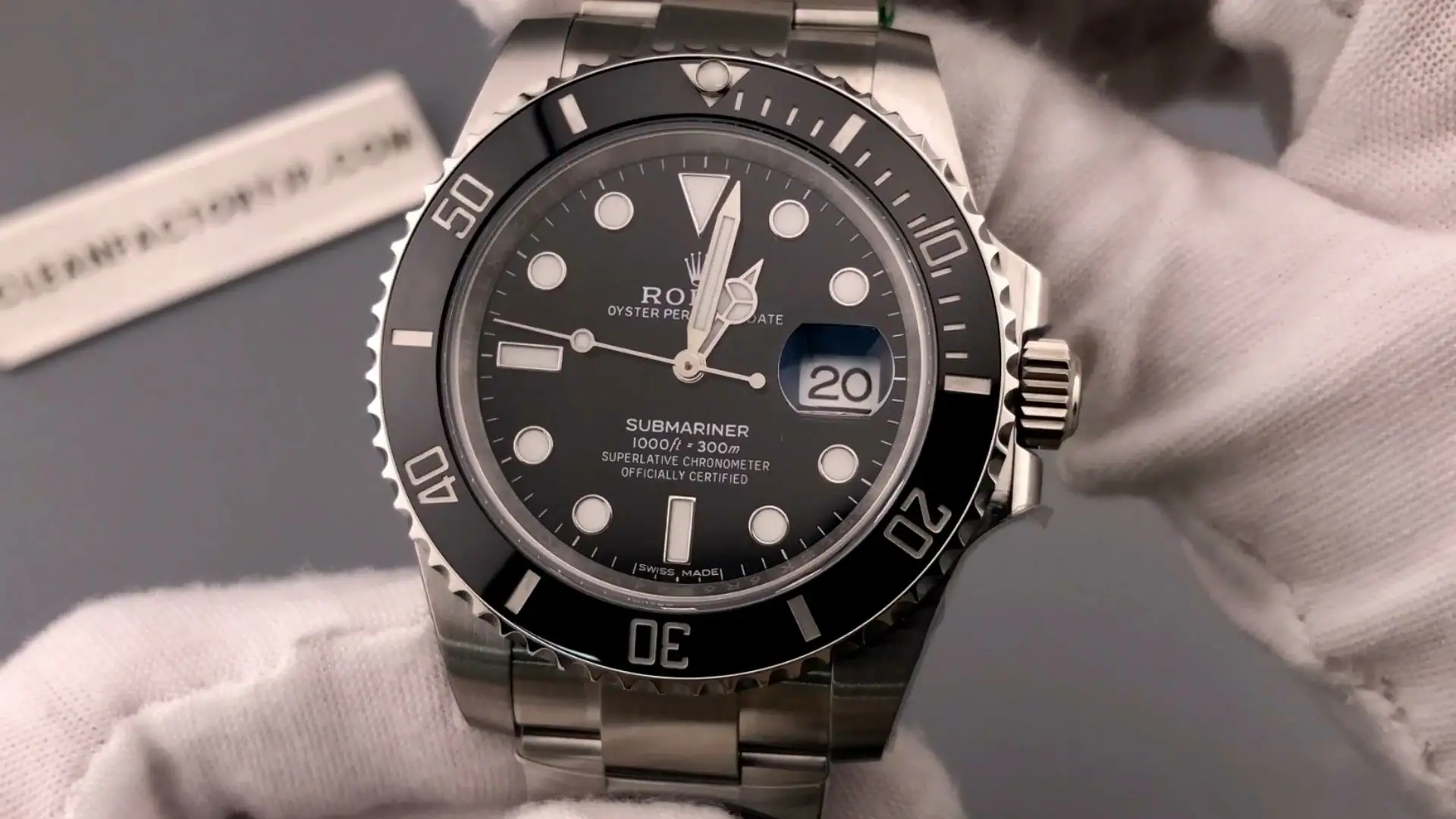
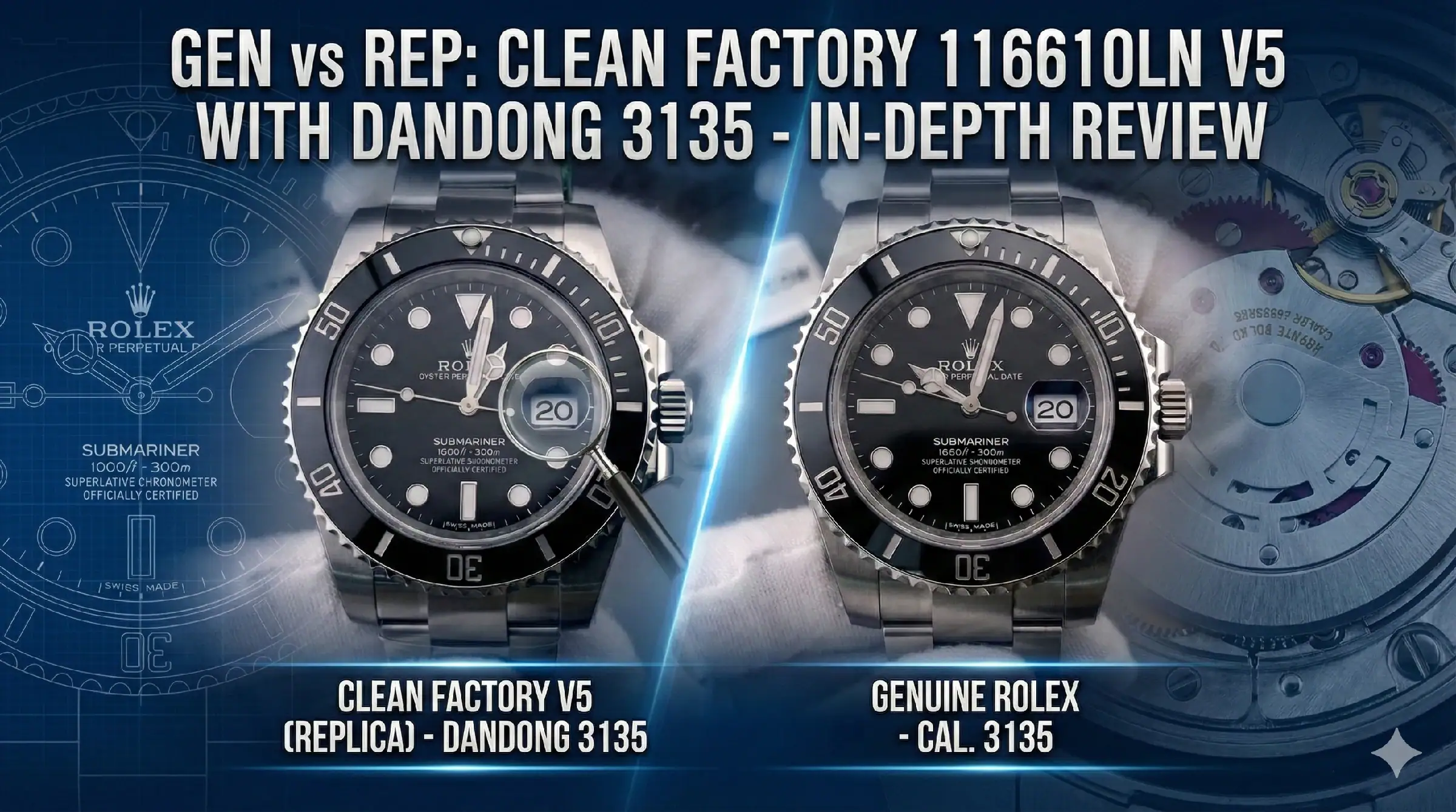
In the replica watch community, achieving a 1:1 Rolex Submariner 116610LN has always been the ultimate benchmark. Over the years, we’ve seen various factories attempt to perfect the details, from the ceramic bezel to the movement stability. With the release of their V5 update, Clean Factory has introduced the highly anticipated Dandong 3135 movement, promising a closer experience to the genuine article. Today, we are doing a comprehensive Gen vs. Rep comparison. We will break down the structural finishing, the tactile feel, and the mechanical reliability of the CF V5 to give you an honest, objective look at where this version stands today.
1. The Foundation: 904L Oystersteel Metallurgy and Case Machining
The bedrock of the Clean Factory Rolex Submariner dandong 3135 movement identity is its material. Historically, the replica industry relied on 316L stainless steel—a perfectly capable, surgical-grade alloy used by brands like Omega and Breitling. However, Rolex’s proprietary “Oystersteel” is fundamentally different; it is a 904L superalloy.
The Chemical Composition and Corrosion Resistance
Clean Factory does not merely stamp “904L” on their spec sheets; they source genuine 904L steel billets for their CNC milling machines. The critical difference between 316L and 904L lies in the alloy formulation. 904L contains a significantly higher percentage of chromium, molybdenum, nickel, and specifically, copper. This unique chemical matrix gives 904L an extraordinary resistance to localized corrosion, pitting, and the aggressive effects of saltwater and sweat.
From an aesthetic standpoint, this metallurgical difference is not just theoretical—it is visible. Because of the higher nickel and copper content, 904L steel, when subjected to high-speed buffing and polishing, achieves a warmer, more brilliant luster that 316L simply cannot replicate. The Clean Factory 116610LN captures this exact specular highlight. When light hits the mirror-polished flanks of the case, it reflects with a fluid, liquid-like brilliance that is the hallmark of genuine Rolex polishing.
CNC Milling and Dimensional Tolerances
The mid-case of the 116610LN is a complex geometric puzzle. Clean Factory utilizes multi-axis CNC (Computer Numerical Control) machines to sculpt the raw steel billets. Let’s examine the tolerances:
-
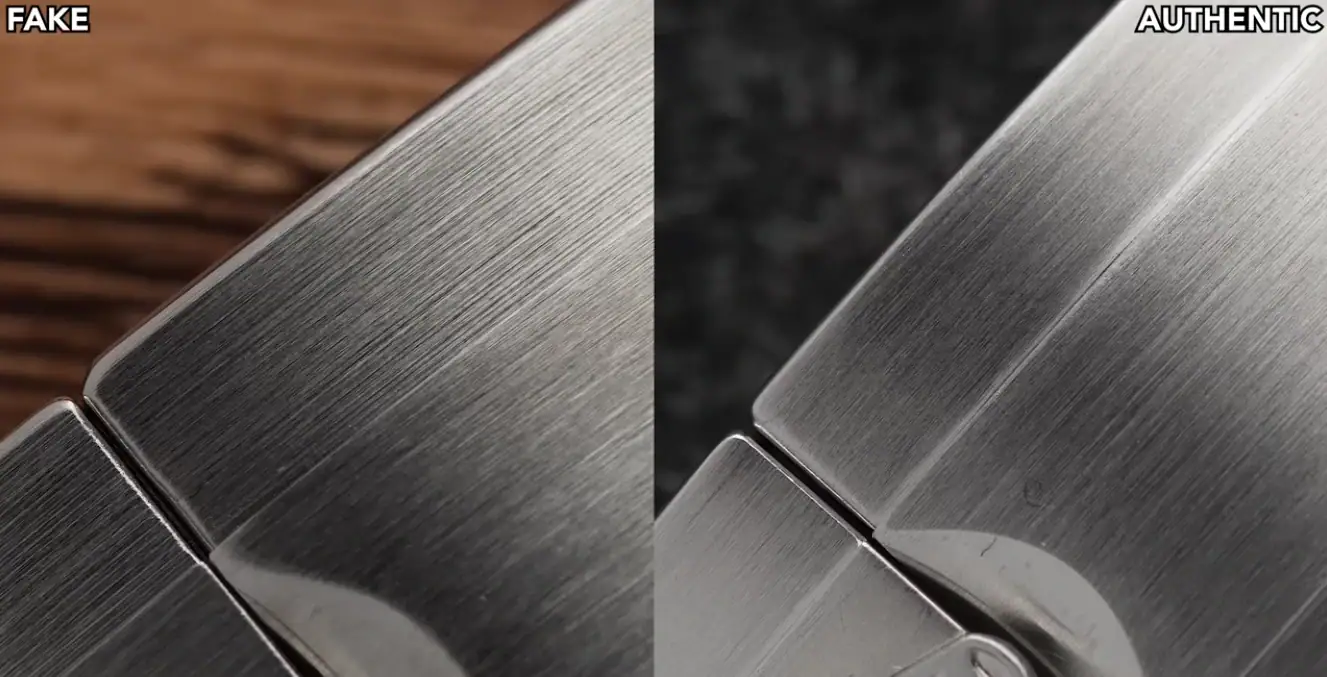
- The Lugs: The transition from the brushed top of the lugs to the high-polish sides features a bevel that must be razor-sharp yet smooth to the touch. Clean Factory executes this transition with micro-metric precision. There is no rounding off of the edges, a common flaw in over-polished lower-tier models. The “maxi-case” profile—known for its broad, aggressive shoulders—is mapped precisely 1:1 against the genuine blueprint.
-
- Crown Guards: The crown guards on the 116610LN are distinct from the newer 126610LN. They must be thick, seamlessly sloping upward to protect the Triplock crown. Clean Factory’s machining here shows zero deviation in thickness, providing the exact symmetrical framing around the 7mm winding crown.
2. The Bezel Assembly: Clean Factory’s Magnum Opus

If there is one component that cemented Clean Factory’s dominance in the market, it is the bezel. Long before they produced complete watches, “Clean Bezels” were the most sought-after aftermarket upgrade for enthusiasts looking to fix the glaring flaws of other factories. The 116610LN bezel is an intricate assembly of steel, synthetic sapphire, ceramic, and platinum.
The Zirconium Dioxide (ZrO2) Ceramic Insert
Rolex’s “Cerachrom” is essentially a high-tech ceramic made from zirconium dioxide powder, mixed with pigments and binding agents, and fired at temperatures exceeding 1,500°C.
-
- The Color Tuning: Black seems like a simple color to replicate, but ceramic black can often fire out looking slightly grey, charcoal, or overly glossy like plastic. Clean Factory has mastered the thermal baking process to achieve a deep, absorbing, “inky” black. Its surface reflects light with a hard, glassy sheen that registers a 9 on the Mohs hardness scale—making it virtually scratch-proof.
-
- Surface Flatness: Under a loupe, the surface of the Clean ceramic insert shows no dimpling or “orange peel” effect, an artifact of uneven cooling in inferior ceramics.
Vacuum PVD Platinum Plating (The Anti-Fading Solution)
The gravest historical flaw of Submariner replicas was the degradation of the bezel markers. Older factories used silver paint, which oxidized, turned grey, or literally washed out over time due to sweat and friction.
Clean Factory eradicated this issue by adopting the exact industrial process used by the Swiss: Physical Vapor Deposition (PVD).
-
- The ceramic insert is molded with the numerals and graduations recessed into the material.
-
- The entire ring is placed into a vacuum chamber where platinum is vaporized and deposited across the surface.
-
- The excess platinum is meticulously polished away, leaving the precious metal strictly inside the recessed markers.
The result is a marker that is not highly reflective or “chrome-like,” but rather possesses a distinct, matte, granular silver-grey texture. This PVD platinum application ensures that the numerals on the Clean Factory 116610LN will never fade, darken, or wash out, perfectly mirroring the longevity of the authentic Cerachrom bezel.
The Luminous Pip (Pearl) and Mechanical Action
-
- The Pip: Positioned at 12 o’clock, the luminous pip is capped with a microscopic piece of domed sapphire crystal to protect the luminous paint. Clean Factory’s pip achieves the correct height (not protruding too far above the triangle) and exhibits a creamy, jade-like translucence in daylight, avoiding the sterile, stark white look of cheaper alternatives.
-
- The 120-Click Mechanism: The tactile feedback of a Submariner bezel is iconic. It relies on an intricate system of click-springs and ball bearings seated beneath the steel bezel ring. Clean Factory has engineered the tension spring to provide exactly 120 crisp, distinct clicks per rotation. The bezel glides with a smooth, hydraulic-like dampening, emitting a sharp, metallic “clack” without any vertical play or back-play (wobble).
3. The Crystal Assembly: Synthetic Sapphire and the Optical “Black Hole”
Protecting the dial is a piece of synthetic corundum, commonly known as sapphire crystal. Like the ceramic bezel, it boasts a Mohs hardness of 9. However, the true test of engineering here is not just the material, but the optical coatings applied to it.
-
- Edge Beveling: The crystal on the Clean 116610LN sits precisely a fraction of a millimeter above the bezel insert, featuring a perfectly chamfered edge that prevents chipping.
-
- The Cyclops Magnification and AR Coating: The 2.5x magnification date lens (the Cyclops) is a Rolex signature. Clean Factory ensures the magnification geometry is perfectly aligned over the date wheel. More importantly, they apply a high-quality, double-sided Anti-Reflective (AR) coating exclusively under the Cyclops lens.
-
- The Black Hole Effect: This specific AR coating features a very faint blue tint. When you tilt the watch and look at the date window from a sharp angle, the glare is entirely eliminated, making the background of the date wheel appear pitch black, while the printed numbers seem to float on the surface of the glass. This phenomenon, known in the community as the “Black Hole Effect,” is flawlessly executed by Clean Factory, passing one of the strictest visual authenticity tests.
Chapter 2: Dial Topography, Micro-Typography, and the Solid Pinion Paradigm
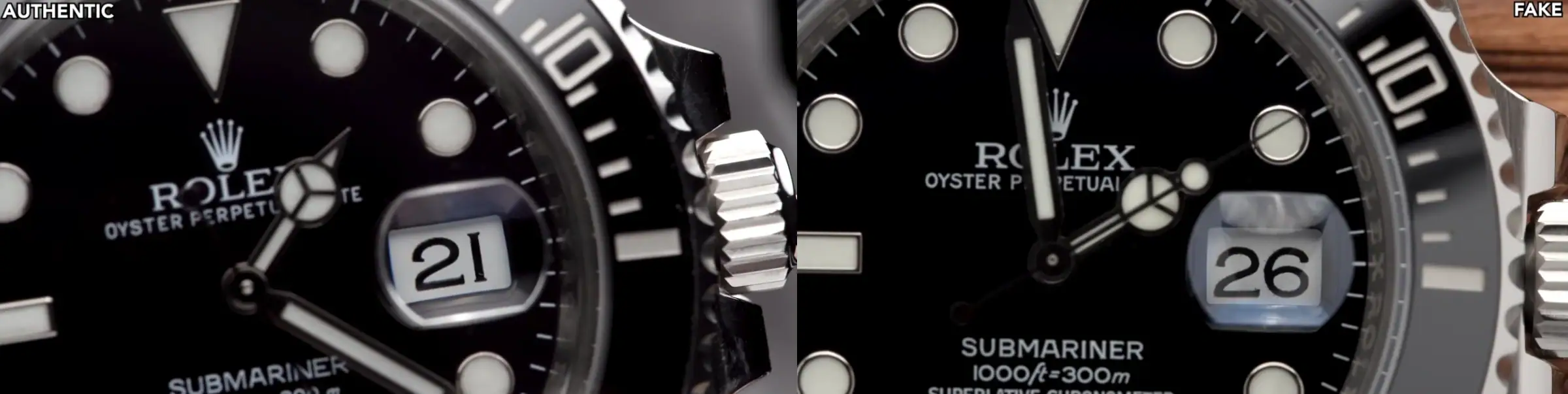
As we transition from the external armor of the 116610LN to the internal display, the engineering parameters shift from macroscopic durability to microscopic precision. The dial of a Submariner is a study in high-contrast readability. To the naked eye, the Clean Factory (C Factory) dial is practically indistinguishable from the genuine article. However, our objective is to evaluate this component under extreme magnification, assessing the surface tension of the lacquer, the viscosity of the printing ink, and the exact machining tolerances of the handset.
1. The Glossy Lacquer Base: Achieving the “Wet Black” Depth
The foundation of the 116610LN dial is not a simple matte or satin finish; it is a highly polished, liquid-like glossy black lacquer. Historically, achieving this pure, bottomless black has been a significant hurdle for aftermarket manufacturers, who often produced dials that looked slightly charcoal, greyish under direct sunlight, or exhibited microscopic dust inclusions.
Clean Factory approaches the dial base with a sterile, dust-free manufacturing environment. The brass dial blank is treated with multiple ultra-thin layers of black lacquer. Through a highly controlled curing and polishing process, the final topography is perfectly flat. The surface tension of the lacquer creates a “wet” look—a deep, light-absorbing enamel finish that reflects light cleanly without scattering it. When you angle the Clean Factory 116610LN, the reflection of the hands glides across the black surface without any distortion, proving the absolute flatness of the substrate.
2. Tampography and 3D Micro-Typography
Once the base is perfected, the critical text—including the Rolex coronet, the “Oyster Perpetual Date” script, and the depth rating—must be applied. Genuine Rolex dials utilize a specialized pad printing process (tampography) that leaves the text slightly raised off the dial surface.
Clean Factory utilizes a highly advanced 3D oil-ink printing technique. The viscosity of the white ink is formulated to prevent any capillary bleeding on the slick lacquer surface.
-
- The Raised Effect: Under a 10x loupe, the text on the Clean dial is not flat. It has a distinct, three-dimensional profile. You can literally see the dome-like structure of the ink resting on the dial.
-
- Typographical Accuracy: The devil is in the details, specifically in the serifs and kerning of the text. Clean Factory has flawlessly replicated the specific font topology of the 116610LN. The slight curve on the ‘f’ in “ft”, the exact spacing between the numbers and the “m” in the “300 m” depth rating, and the precise geometry of the coronet’s five points and oval base are mapped with micrometer accuracy. The edges of the letters are surgically sharp, with no fuzzy borders—a testament to the high-resolution silicone pads used in their printing process.
3. The Handset Finishing and the “Solid Pinion” Paradigm
Perhaps the most notorious historical “tell” (an identifying flaw) of replica Submariners has been the center pinion—the axis where the hour, minute, and seconds hands connect. Lower-tier factories punch their hands from cheap metal and cap them on a hollow, flat-topped tube, resulting in an “open hole” look that is immediately obvious to any seasoned collector.
Machining the Solid Pinion
Clean Factory has engineered what the community refers to as the definitive “Solid Pinion.”
-
- Structural Geometry: The center tube of the seconds hand is precisely machined into a conical, funnel-like shape.
-
- The Center Cap: The very center features a microscopic, highly polished solid domed pin, completely sealing the axis. It catches the light exactly like the genuine caliber 3135 hand stack. This requires extreme micro-machining capabilities, as the tolerances here are measured in fractions of a millimeter.
Hand Polishing and Dimensions
The Mercedes hour hand, the minute hand, and the lollipop seconds hand are cut from steel. However, merely cutting the shape is insufficient. Standard punching leaves microscopic burrs (rough metallic edges) along the sides of the hands. Clean Factory employs an additional tumbling and edge-polishing phase. Under macro photography, the flanks of the hands are smooth and highly reflective. Furthermore, the length of the minute hand reaches the exact edge of the minute track, and the hour hand clears the luminous indices with perfect clearance, matching the genuine sweeping radius.
4. 18K White Gold Plated Surrounds and Chromalight Luminescence
The indices (the circular, rectangular, and triangular hour markers) are not simply glued to the dial. In the genuine 116610LN, these surrounds are crafted from 18k white gold to prevent tarnishing over decades of use. Clean Factory simulates this by utilizing high-quality steel surrounds that are thickly plated to achieve that warm, white-gold luster, which is distinctly different from the cold, clinical shine of standard polished steel.
Application of the Luminous Compound
Inside these surrounds sits the luminous material. Rolex calls their proprietary compound “Chromalight,” known for its blue emission spectrum.
-
- The Fill Volume: A common manufacturing defect in lesser watches is overfilling the indices, creating a domed or “puffy” lume plot, or underfilling them, leaving a concave depression. Clean Factory precisely dispenses the luminous powder so that it sits perfectly flat and flush with the top edge of the metal surrounds.
-
- The Emission Spectrum: Clean Factory utilizes imported Swiss luminous material that perfectly mimics the chemical properties of Chromalight. In daylight, the material is a pristine, chalky white without any greenish undertones. When charged by UV light, it emits a powerful, stable blue light (approximately 480nm wavelength). The decay rate of the luminosity is exceptional, holding a readable charge for hours in total darkness, with an initial blazing intensity that matches the genuine output.
Chapter 3: Articulation and Micro-Tolerances – The 904L Oyster Bracelet and Glidelock Architecture
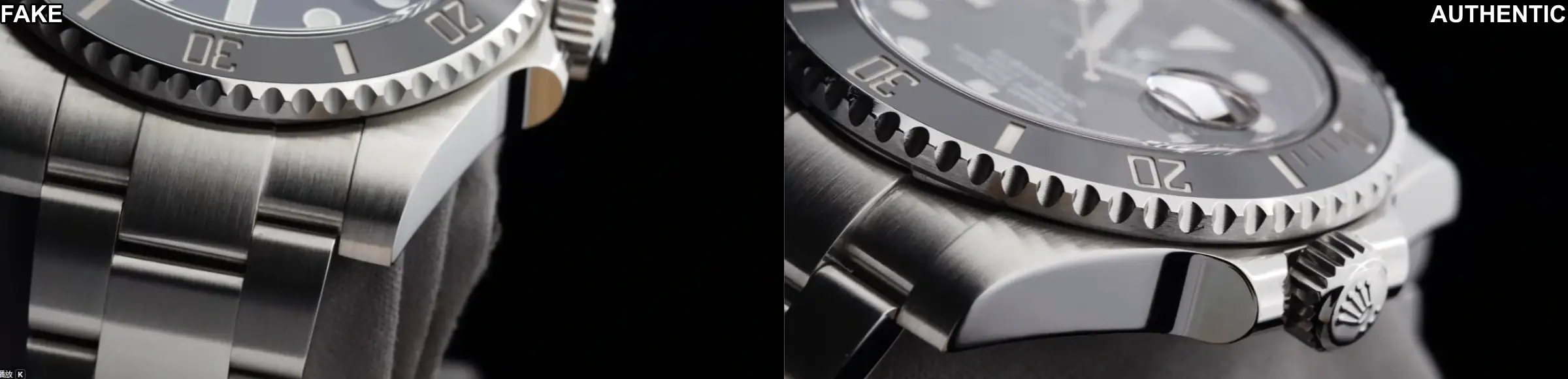
While a watch’s dial and bezel capture the eye, the bracelet dictates the tactile reality of wearing a high-end timepiece. The tactile feedback, the acoustic resonance of the metal, and the microscopic tolerances between moving parts are where average replicas fail spectacularly. They rattle, they feel sharp, and they suffer from substantial gap tolerances.
For the 116610LN, Clean Factory has made a highly strategic engineering decision: rather than manufacturing the bracelet in-house, they source it from AR Factory (ARF), a manufacturer universally recognized in the industry for setting the absolute benchmark in 904L stainless steel machining. In this chapter, we evaluate the articulation, the Solid End Link (SEL) geometry, and the complex micro-mechanics of the Glidelock clasp.
1. The Solid End Link (SEL) Integration: A Study in Gap Tolerances
The most critical junction on any Oyster case is where the bracelet meets the watch head—the Solid End Links (SEL). On genuine Submariners, this fitment is so precise that it appears as though the bracelet organically grows out of the case.
-
- The Tolerance Matrix: Clean Factory’s SEL fitment demonstrates zero longitudinal or lateral play. When inspected under magnification, the gap between the curvature of the case between the lugs and the contour of the end link is measured in micrometers. It is virtually entirely flush.
-
- The Recess Profile: A key identifier of an authentic 116610LN is that the center piece of the end link must sit slightly recessed (lower) than the outer lug horns. Lesser factories often make this completely flush or even protruding. Clean Factory correctly machines this three-dimensional step-down geometry, ensuring the architectural depth of the case profile remains intact.
2. The 904L Oyster Links: Machining and Surface Finishing
The Oyster bracelet is a three-piece solid link construction. The interplay between the different surface finishes is what gives 904L steel its distinct, premium visual weight.
-
- Satin Brushing vs. Mirror Polishing: The top surfaces of the ARF bracelet links feature a unidirectional satin brush finish. Under a loupe, the grain is perfectly parallel, exhibiting a soft, velvety texture rather than the harsh, abrasive scratches seen on cheaper bands. Conversely, the lateral flanks of the links are mirror-polished. The transition between the brushed top and polished side features a microscopic bevel, eliminating any sharp, unmachined edges that could cause discomfort on the wrist.
-
- The Screw Pins: The links are secured via threaded screw pins, not friction pins. Clean Factory ensures that the threads are cut cleanly, and when fully seated, the screw heads sit perfectly flush with the side of the links, neither protruding nor recessed too deeply.
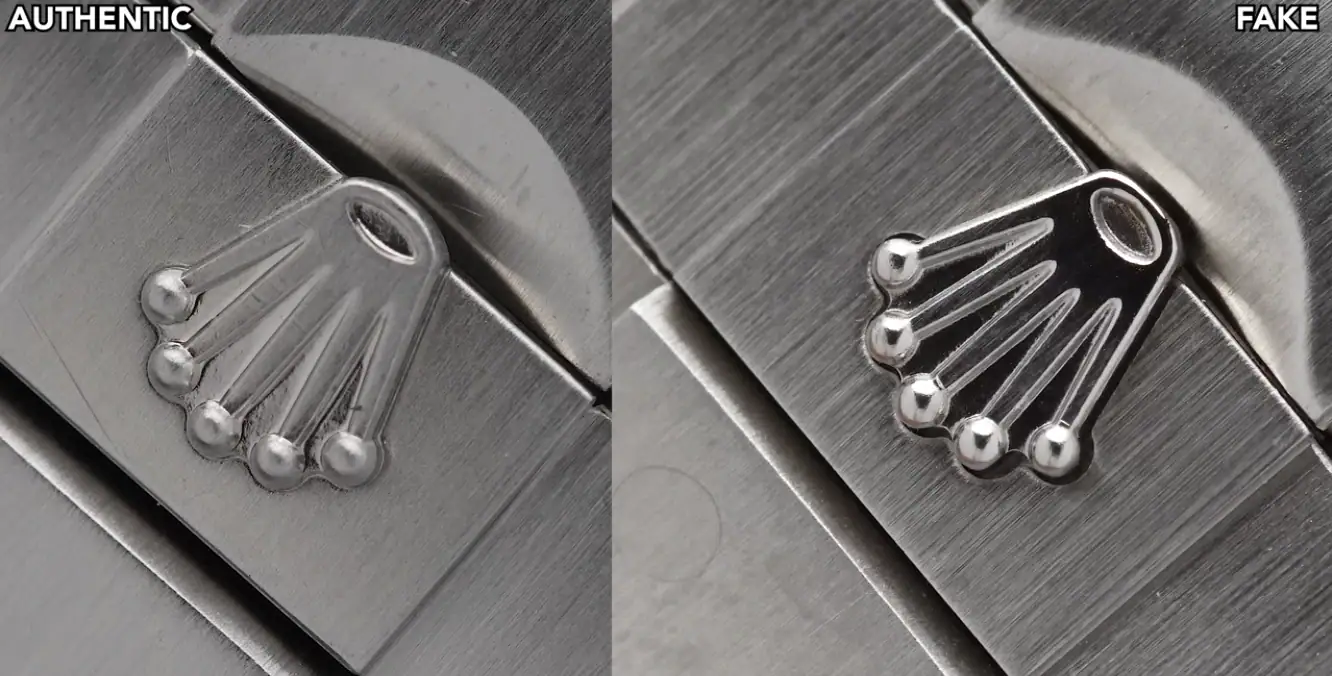
3. The Oysterlock Clasp: Security and Acoustic Feedback
The folding Oysterlock safety clasp is a masterclass in metal folding, spring-loaded locking, and tactile engineering.
-
- The Closure Acoustics: A genuine Submariner clasp closes with a definitive, resonant “snap”—a sound that signifies tight spring tension and perfectly aligned locking hooks. Clean Factory replicates this acoustic signature flawlessly. The safety catch requires deliberate, measured force to open, guaranteeing it will never accidentally deploy under stress.
-
- Internal Laser Engraving: Opening the clasp reveals the complex internal mechanics and engravings. Clean Factory uses a two-stage laser etching and high-pressure stamping process. The Rolex scroll pattern, the “GENEVA” text, and the “SWISS MADE” hallmarks are deeply engraved with blackened, frosted recesses, contrasting sharply with the polished surrounding metal.
4. The Glidelock Extension System: Mechanical Fluidity
The crown jewel of the Submariner’s bracelet is the Glidelock extension system, designed for divers to adjust the bracelet length by 20mm in 2mm increments without tools. From a manufacturing perspective, this is a highly complex sliding carriage system that relies on precise tooth engagement.
-
- The Carriage Track: Underneath the clasp cover is a precisely milled track with a series of teeth. Clean Factory’s track is machined with exceptionally sharp right angles, ensuring maximum grip.
-
- Tactile Glide and Lock: To operate it, you lift the center link to disengage the teeth and slide the carriage. On inferior models, this action is gritty, requiring excessive force, and often feels like metal grinding against metal. The Clean Factory (ARF-sourced) Glidelock slides with a smooth, hydraulic-like fluidity. When you press the link back down, it locks into the teeth with a satisfying, highly secure mechanical click. There is no horizontal wobble in the carriage once locked. This level of mechanical feedback proves that the CNC machining tolerances of the individual clasp components have been engineered to the highest possible standard.
Chapter 4: The Engine Room – Decoding the Dandong Caliber 3135 Architecture and Kinematics

The external armor of the Clean Factory 116610LN is undoubtedly a masterclass in metallurgy and CNC machining. However, the true soul of any horological instrument resides within its case back. For decades, the Achilles’ heel of the replica industry was the movement. Manufacturers relied on modified, off-the-shelf ETA clones (like the 2824 or 2836) equipped with decorative plates. These “decorated” movements suffered from incorrect stem heights, unreliable date mechanisms, and most glaringly, the wrong crown rotation direction when setting the time.
Clean Factory dismisses these compromises entirely. For the V5 release, they have completely transitioned to the highly coveted, ground-up 1:1 super-clone: the Dandong Caliber 3135. By utilizing this premier engine, they have engineered a kinematic chain that mirrors the genuine article not just in visual topology, but in mechanical operation and dimensional architecture.
1. Architectural Topography and Upgraded Movement Finishing
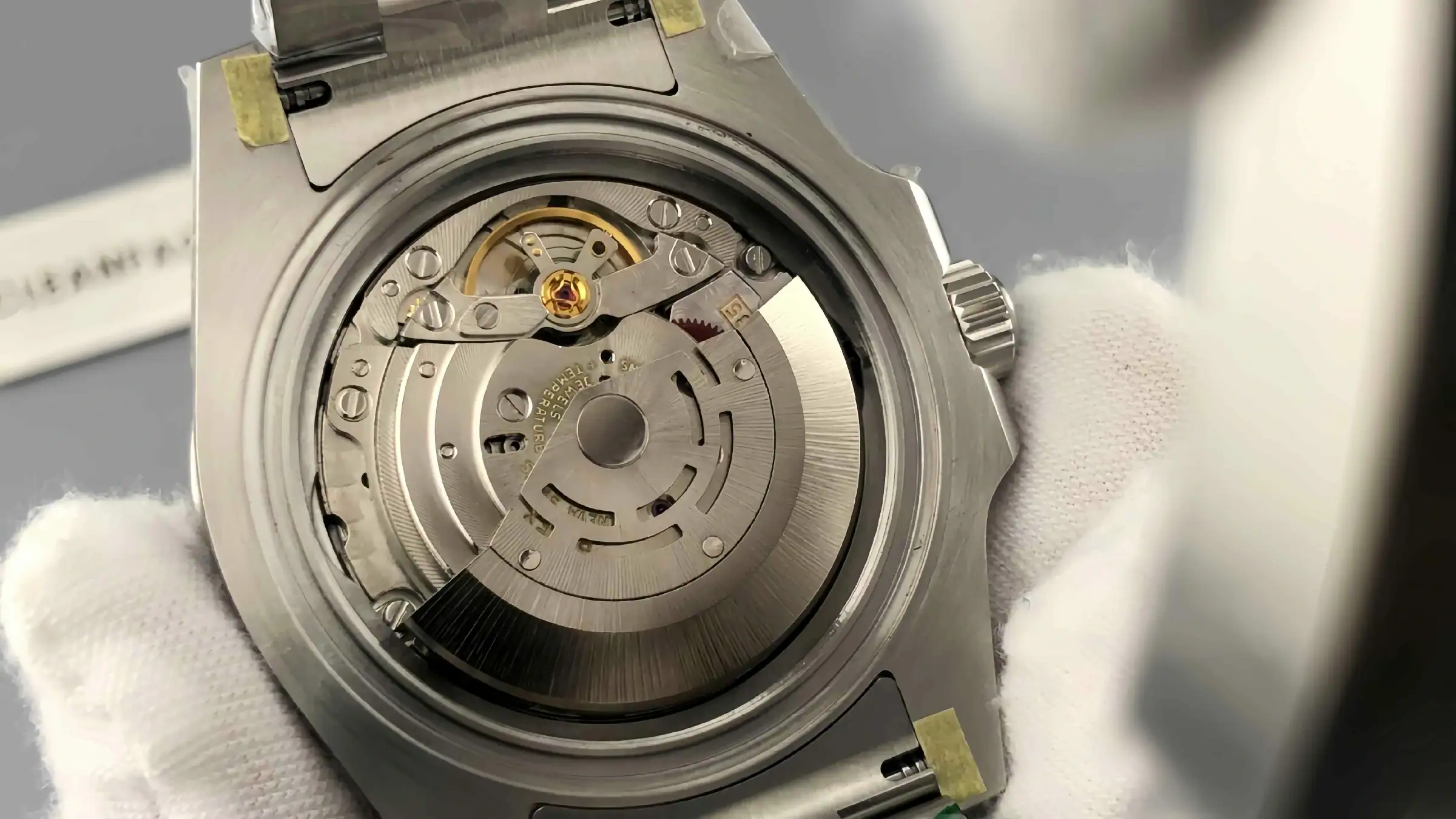
Removing the solid Oyster case back reveals a mechanical landscape that borders on forensic forgery. The custom Dandong 3135 movement is a visual triumph of micro-engineering, boasting significant upgrades in the V5 iteration to ensure the structural architecture is closer to the genuine article than ever before.
-
- Bridge Finishing and Perlage: The mainspring barrel bridge, the train wheel bridge, and the balance bridge are finished with a meticulously upgraded sunburst brushing, mimicking the distinct graining of the Swiss counterpart. The base plate features tightly grouped, circular perlage. Clean Factory applies these finishes with industrial precision, ensuring the depth of the abrasions catches the light dynamically.
-
- The Ruby Bearings and Engravings: The synthetic ruby jewels are seated accurately within the bridges, providing the necessary low-friction pivot points for the gear train. The gold-filled engravings—including the “3135” caliber designation, the Rolex coronet, and the “Montres Rolex S.A.” text—are deeply milled and perfectly legible under a 10x loupe.
-
- The Reversing Wheels: The iconic red Teflon-coated reversing wheels of the automatic winding module are present and functionally identical, ensuring efficient bi-directional winding of the mainspring.
2. The Oscillator System: The Blue Parachrom Illusion
The beating heart of the Caliber 3135 is its oscillator assembly. Genuine Rolex movements utilize a proprietary niobium-zirconium alloy for their Parachrom hairspring, identifiable by its stark blue color.
-
- Visual Replication: While it is metallurgically impossible for a replica to utilize the exact proprietary Swiss alloy at this price point, Clean Factory has visually replicated the blue hairspring to an astonishing degree. They utilize a thermally blued metallic hairspring that mimics the exact hue of the Parachrom component.
-
- The Balance Bridge: The movement features the correct traversing balance bridge (anchored on both sides for superior shock resistance) rather than a single-sided balance cock. Additionally, the balance wheel is equipped with the distinctive Microstella regulating nuts, completing the visual illusion of a free-sprung oscillator.
3. Chronometric Specifications and The 48-Hour Power Reserve
When discussing the mechanics of the 116610LN, we must rely on strict data rather than marketing hyperbole. The physical capabilities of this Dandong clone movement are where it truly shines as a daily wearer.
-
- The Power Reserve: It is imperative to state the exact mechanical specifications of the Caliber 3135. Unlike the newer 126610LN (which utilizes the 3235 movement with a 72-hour reserve), the standard power reserve for the classic 3135 movement is 48 hours. Clean Factory’s Dandong clone respects this historical and mechanical reality perfectly. A fully wound mainspring barrel in this movement delivers a highly stable, consistent torque curve for exactly 48 hours, ensuring amplitude does not drastically drop off as the spring unwinds.
-
- Beat Rate and Amplitude: The escapement operates at a frequency of 28,800 vibrations per hour (vph), or 4 Hertz. This dictates the signature smooth, 8-ticks-per-second sweep of the seconds hand. Straight out of the factory, these movements are rigorously regulated to maintain high amplitude (typically between 270° and 290° when fully wound).
4. Operational Kinematics: The True 3135 Experience
The ultimate test of a super-clone movement is not how it looks, but how it feels and operates in the hands of the user. This is where the Dandong 3135 completely separates itself from modified ETA movements.
-
- Time-Setting Direction: This is the ultimate “tell” for purists. On a genuine Rolex Caliber 3135, turning the winding crown clockwise causes the hands to move clockwise. Clean Factory’s kinematic gear train is identical to the original. When you set the time, the mechanical logic is completely accurate.
-
- The Date Complication and V5 Font Correction: The date jump mechanism is instantaneous. Unlike lower-tier movements, the Dandong 3135 stores tension on a cam, and exactly at midnight, the date wheel snaps sharply to the next day with a crisp, audible click. Crucially, the V5 release introduces a flawlessly corrected date font. It completely eliminates any edge burrs and the notorious inkjet-like background bleed found in earlier iterations, offering razor-sharp legibility through the optimally corrected, white-edge-free sapphire crystal. Furthermore, the crown positions are perfectly spaced: Position 1 for manual winding, Position 2 for the quick-set date, and Position 3 for hacking the seconds hand and setting the time.
5. Tactile Kinematics: The V5 Mechanical Interface
While the engine dictates the time, the user interacts with the external mechanics. The V5 update drastically refines these tactile touchpoints to match the internal precision. The rotational kinematics of the bezel have been completely re-engineered; the once-stiff action is now flawlessly smooth with distinct, crisp actuation. Additionally, the clasp and Glidelock mechanism have been adjusted to provide a perfectly dampened, “suction-door” like closure—delivering a silky smooth mechanical feedback that perfectly complements the newly hand-chamfered, fully rounded edges of the 904L Oyster bracelet.
Chapter 5: Final Thoughts and Technical FAQ – Assessing the V5 Upgrade
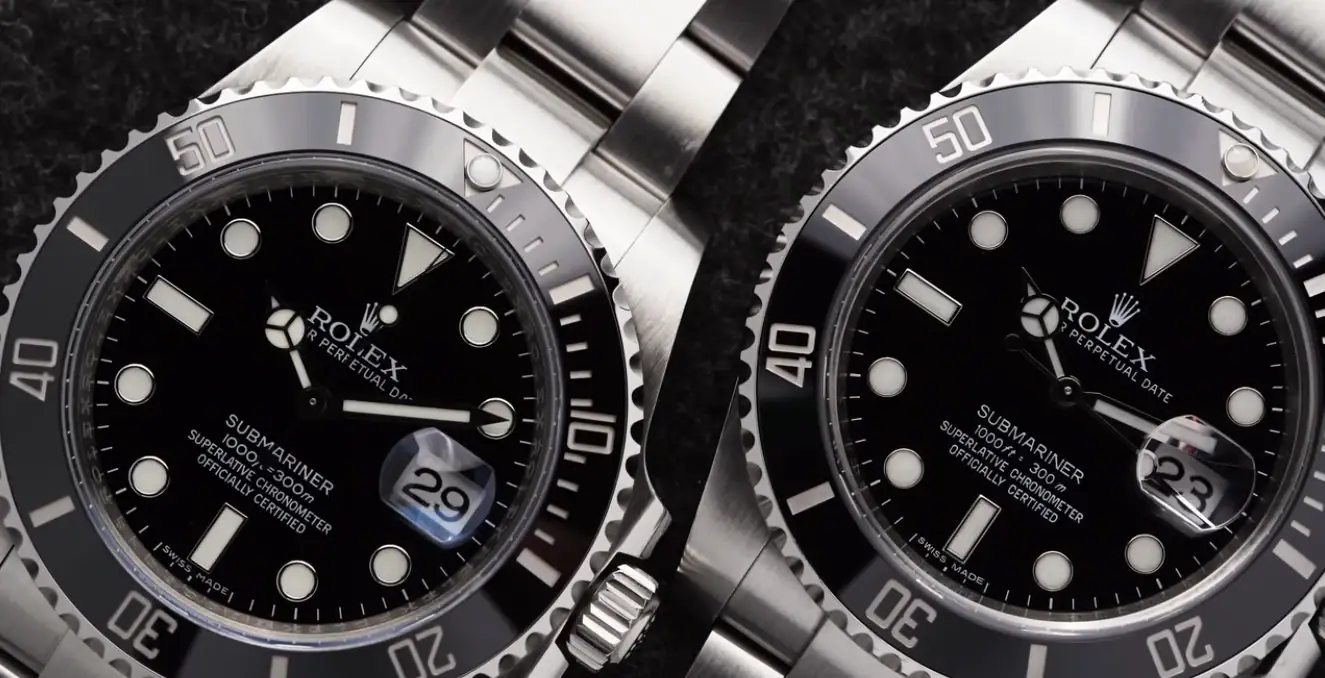
After a detailed, component-by-component comparison between the genuine Rolex Submariner 116610LN and the Clean Factory V5, the progression in the replica market is evident. Clean Factory has systematically addressed many of the historical “tells” that plagued earlier generations—such as the fading platinum bezel markers, hollow hand pinions, and stiff bracelet articulation.
The transition to the Dandong 3135 movement is perhaps the most significant functional upgrade, providing reliable chronometric performance and the correct 48-hour power reserve. While no replica is entirely flawless under extreme microscopic scrutiny, the CF V5 has undoubtedly closed the gap significantly. For collectors looking for a highly accurate daily wearer that captures the tactile and visual essence of the 116610LN, this version stands as a very strong contender in the current market.
Technical FAQ: Addressing the Most Critical Collector Concerns
To provide complete transparency, we have compiled the most frequently asked questions regarding the Clean Factory 116610LN.